
From Shared Leads to Full Diary: An Islington Plumber's 2026 Guide
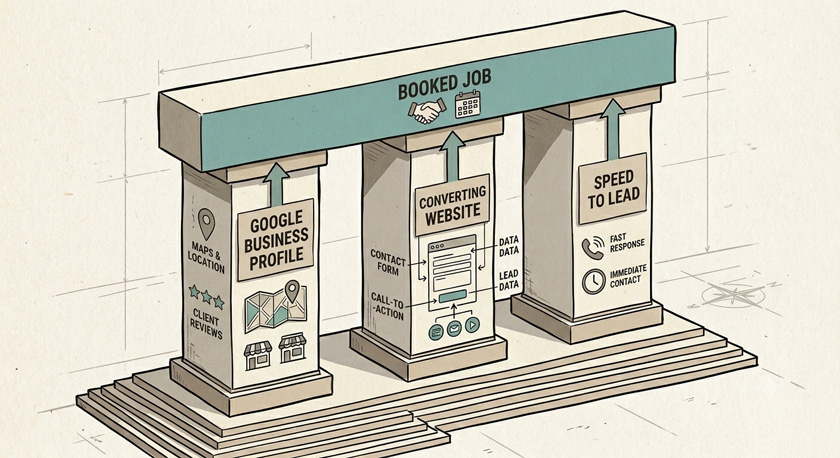
Lead generation for plumbers in Islington has changed shape in 2026. The platforms trades used to rely on, like Checkatrade, MyBuilder, Bark and Rated People, still spend heavily on Google but increasingly deliver shared, low-intent enquiries sold to multiple plumbers at once. Meanwhile Google's Maps pack and AI Overviews are pulling clicks away from traditional listings. The plumbers winning across Islington right now are the ones who:
Own a fully optimised Google Business Profile ranking in the Maps pack for their core wards, such as Angel, Highbury, Holloway, Archway, Canonbury, Barnsbury, Tufnell Park and Clerkenwell
Run a fast, mobile-first website that turns visitors into phone calls in under three taps
Reply to every enquiry inside five minutes using missed-call text-back and automated SMS
Stack Google reviews from every paying customer
Use Google Local Service Ads and tightly-targeted PPC only where the maths works
Reactivate old quotes and enquiries with a structured follow-up sequence
This guide covers each lever in detail, plus a 90-day plan, a checklist, common mistakes, and a 12-question FAQ. If you'd rather have it built for you, book a strategy call with Wildlangosta.
Why Islington is one of London's most under-served plumbing markets
Islington has around 223,024 residents (Office for National Statistics, 2024), with population forecast to grow to roughly 251,954 by 2025 (ONS projections). What makes Islington stand out from almost every other London borough is the combination of density and growth. It is the 2nd most densely populated borough in London at around 14,575 to 15,010 people per square kilometre, second only to Tower Hamlets, and it achieves that on the smallest land area of any London borough: just 14.86 square kilometres. The population growth rate of around 1.53% sits 8th highest across London's 33 boroughs.
Three things make Islington especially strong for plumbing trades.
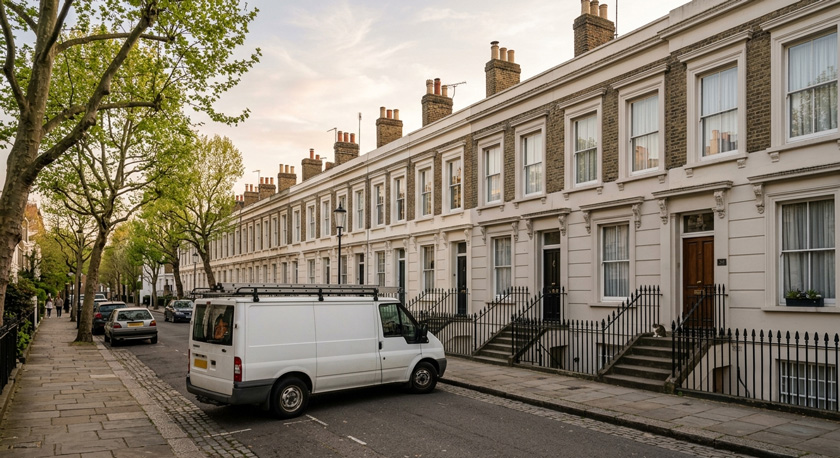
First, the housing stock. Islington is famous for its Georgian terraces, particularly across Canonbury, Barnsbury and around Highbury Fields, mixed with Victorian conversions, mansion blocks, post-war council estates (heavy in parts of Holloway, Archway and Caledonian) and a fast-growing pipeline of new-build developments along the King's Cross border and around Old Street. Older properties mean older pipework, older heating systems, repeat boiler work, leak detection, drainage problems and full bathroom refurbishments. New-builds need first servicing, snagging and ongoing maintenance once tenants move in.
Second, the demographic profile. Islington has a median age of just 32.9, well under the UK average of 40.7 (ONS mid-2024 estimates). A young, professional, heavily-rented population in a dense Inner London borough translates directly to higher tenancy turnover, more shared-house occupancy, more end-of-tenancy plumbing works, more gas safety inspections on rental properties, and quick-turnaround jobs.
Third, sustained construction. Islington Council is targeting 775 new homes every year, with 7,750 planned by 2029 and 13,175 by 2037 (Islington Council Economic Development Strategy). That is a decade of consistent build-out across the borough, especially around the King's Cross fringe, Old Street and the canalside developments around St Peter's. Every new home becomes a stream of plumbing work once occupied.
The wider UK picture supports this. The Office for National Statistics reported that private housing repair and maintenance output across Great Britain grew 4.1% in Q1 2026, the single biggest positive contributor to construction output that quarter (ONS, 2026), and Government commentary forecasts repair, maintenance and improvement output to grow 2.2% in 2026 and 2.4% in 2027 (Gov.uk Construction Commentary, December 2025). The UK plumbing, heating and air-conditioning installation industry as a whole was valued at £24.7 billion in 2025 (IBISWorld, November 2025).
The demand is there. The problem is distribution: who gets the call, and how the call reaches them.
Why Islington plumbers are getting fewer leads than they used to
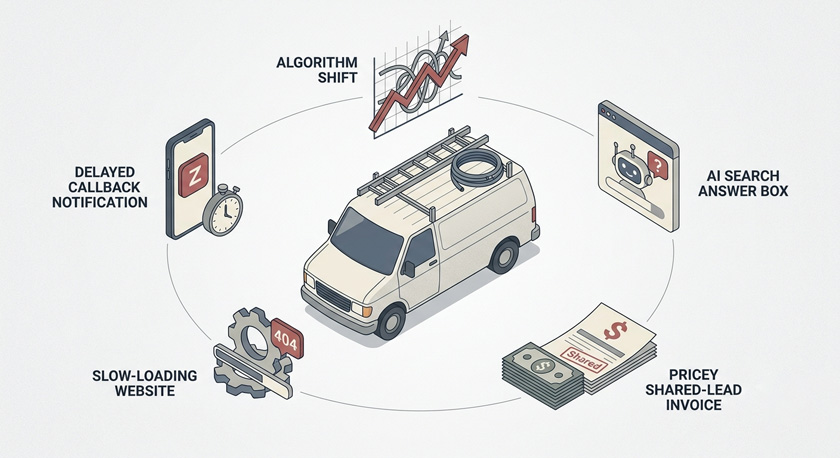
There isn't one reason. There are five, and most plumbers are hit by at least three at once.
1. Google now rewards fully-built profiles and buries thin ones. A Google Business Profile that hasn't been touched in 18 months, has four reviews, no recent photos and the wrong categories is now effectively invisible in the Maps pack in a competitive Inner London borough like Islington.
2. AI Overviews are answering questions plumbers used to get clicks for. When a homeowner in Canonbury searches "how long does a power flush take" or "do I need a Gas Safe engineer to replace a boiler," Google's AI answers in-page. Around 26% of UK searches now end without a click, and AI-generated answers appear in roughly 32% of local queries. The plumber whose content is structured for citation gets mentioned. The plumber whose content isn't, doesn't.
3. Paid platforms keep raising prices and reselling leads. Plumbers report paying £15 to £40 per lead on Bark, with the same enquiry sold to four to eight businesses. Cost per won job often lands at £150 to £300, before VAT and the time spent chasing dead enquiries.
4. Most plumber websites still don't convert. Slow load, ten-field forms, no phone number above the fold, no reviews, no clear answer to "do you cover Angel." A site that doesn't convert turns expensive traffic into wasted spend. We unpack this in why am I not getting leads from my website.
5. Speed to lead is the silent killer. Most plumbers reply in hours, not minutes. The homeowner has already booked whoever called back first.
The three lead sources that actually convert for Islington plumbers
Source 1: Google Business Profile and the Maps pack
For an Islington plumber, Google Maps is the most valuable real estate on the internet. It's the digital equivalent of being the nearest, best-reviewed plumber when a homeowner in Highbury opens their phone with water dripping through a ceiling.
A profile that ranks for "plumber Angel" or "emergency plumber Canonbury" needs:
Categories: A primary category of Plumber plus secondary categories covering Emergency Plumber, Boiler Installer, Drain Cleaning, Heating Contractor and anything else you offer. Wrong or missing categories is the single most common reason a profile doesn't rank.
Services: Each service written exactly as a homeowner would search for it.
Service areas: The Islington wards you genuinely work, such as Angel, Highbury, Holloway, Archway, Canonbury, Barnsbury, Tufnell Park, Clerkenwell, Caledonian and St Peter's. Don't claim all of North London if you only work Islington itself. Google spots over-reach and downranks for it.
Photos: Fresh uploads every 1 to 2 weeks. Vans, jobs, before-and-afters, team shots.
Q&A: Pre-seed your own profile with the questions homeowners ask, such as pricing, emergency response time and what areas you cover, and answer them.
Reviews: Volume matters, recency matters more. Thirty reviews from the last 90 days beats 200 reviews from 2021.
Posts: Weekly micro-posts about recent jobs or seasonal services. Small signal, free.
Full playbook on our Google Business Profile optimisation for contractors page.
Source 2: A website built for conversion, not decoration
If your Maps profile is the shopfront, your website is the conversation after the homeowner walks in. A converting plumber website in 2026 has, in this order: phone number top right and sticky on mobile with tap-to-call; a plain-English headline naming what you do and where, such as "Emergency plumbers covering Islington and Inner North London, 24/7"; ward or area pages for your key Islington zones; reviews and star rating above the fold; real photos of local jobs; a three-field form covering name, phone and what you need; and page load under three seconds on mobile.
Most plumber websites load in 6 to 10 seconds on 4G, which alone halves conversion. Read more in contractor websites that convert and on our websites built for contractors page.
Source 3: Speed-to-lead and the first five minutes
This is the most underrated lever in trades and the cheapest to fix. A 2025 home services study tracking thousands of contractor leads found that text responses under 60 seconds achieved a 73% booking rate, versus 4% for replies after 30 minutes. In a dense Inner London borough where homeowners contact three or four plumbers in parallel, the first to respond wins around 78% of the time.
The fix isn't picking up faster, which isn't realistic when you're under a sink. It's a system: missed-call text-back, form-to-SMS automation within 30 seconds, a two-touch follow-up, and a call-back booking offer. We've productised this on our speed-to-lead automation for contractors and lead follow-up and reactivation for contractors pages.
The honest case against Checkatrade, MyBuilder, Rated People and Bark
Plumbers ask about these platforms more than any other marketing question, so let's be direct.
Checkatrade is the largest paid-listing platform in the UK, charging a tiered membership, typically £80 to £200 a month, for a profile, a vetted badge and exposure to consumer traffic. For an established Islington plumber with their own steady work, it often acts as a credibility signal more than a lead source: the homeowner Googles you, sees the badge, and rings. That's fine, but you're paying for trust signalling you could earn for free with 100 Google reviews.
MyBuilder runs a pay-per-lead model. You pay when you express interest in a job. In practice the same job is open to multiple plumbers, the customer rarely picks the dearest quote, and there's no built-in payment protection.
Rated People offers high volume of shared leads sent to several plumbers at once. Useful for filling slow weeks; punishing for margin if it becomes your main channel.
Bark runs a credit system: you pay to even reply, the lead is shared, and homeowner intent is often weak. Plenty of plumbers report paying £15 to £40 per credit for leads that go cold.
Our honest take: useful in your first six months when you have no reviews, no Maps presence and no website worth anything. Past that point you're funding the platform's growth instead of your own. More in stop paying for shared leads UK contractors and Bark alternatives UK.

Local SEO for plumbers across Islington: the ward-level problem
Islington isn't one place. Despite being the smallest borough by area in London, it covers a cluster of distinct wards and neighbourhoods, each with its own search behaviour, housing profile and demographic mix. A homeowner in Canonbury searches "plumber Canonbury." A homeowner in Holloway searches "plumber Holloway." A homeowner in Archway searches "plumber Archway." None of them search "plumber Islington" unless they're new to the borough.
A single homepage targeting "plumber Islington" will rank for almost nothing. The plumbers winning across the borough use a layered site:
Homepage targeting the broad term (plumber Islington, plumber North London) as the brand hub.
Service pages for each thing you offer (boiler installation, emergency plumbing, drainage, bathroom refurb, gas), each 800+ words with FAQs and schema.
Ward pages for the parts of Islington you actually serve, such as Angel, Highbury, Holloway, Archway, Canonbury, Barnsbury, Tufnell Park, Clerkenwell and Caledonian, with real content: local job photos, named streets and landmarks, response times. Thin "we serve [ward]" pages get penalised in 2026, not rewarded.
Blog or guides answering common questions ("how much does an emergency plumber cost in London," "how to find a Gas Safe plumber in Islington") to capture top-of-funnel search.
Because Islington is Inner North London, it's worth aligning with how Londoners search by sub-region. The same approach we documented for electrician leads North London applies directly to plumbers. The broader electrician leads London post sets out the same sub-region logic at the city level.
Add NAP consistency (identical Name, Address, Phone across every directory), proper schema markup, internal linking between ward pages and service pages, and citations on the right UK directories. Full picture on our local SEO for contractors page.
Reviews and reputation: the unfair advantage in Islington
Reviews aren't an add-on in 2026. They are the channel. A business with 50 or more Google reviews earns roughly 266% more leads than one with fewer than 10. Recency matters as much as volume.
The reality of getting reviews from Islington homeowners: they won't leave one unprompted, even when delighted. They will if you ask within 24 hours of finishing, by SMS, with a one-tap link. Ask every paying customer, not just the ones you think will leave five stars. A simple workflow: job complete and invoiced, SMS with a review link within four hours, one polite follow-up after 72 hours if no review, and reply to every review within 48 hours, especially the critical ones.
Full breakdown in how to get more Google reviews for your trade business and on the review generation and reputation for contractors page.

Paid ads done right: Google Local Service Ads and tight PPC
Paid ads work for Islington plumbers, but only once your owned channels are in shape and only if the maths is right. Pumping budget into Google Ads while sending traffic to a slow, unconverting site is the fastest way to burn £3,000 with nothing to show.
When you're ready, the two channels worth running are Google Local Service Ads, which sit above the Maps pack, work on pay-per-lead, and require Google verification (DBS check, insurance proof, Gas Safe registration), and Google Search Ads on tightly defined local keywords like "emergency plumber Angel," "boiler repair Highbury" or "blocked drain Canonbury." Avoid broad terms like "plumber London," which are expensive and low-intent. Use negative keywords aggressively (jobs, course, DIY, salary, apprenticeship). Full setup on our paid lead generation for contractors page.
The follow-up system that triples conversion
Most plumbers think marketing ends when the quote is sent. That's the moment it actually begins. Roughly half of all enquiries that go quiet after a quote will book someone else within two weeks. A structured, professional follow-up sequence recovers 20 to 30% of those.
A practical 14-day sequence after a quote: confirm receipt within five minutes; a friendly check-in on day 2; a gentle "are you closer to a decision" on day 5; a final "I'm holding the slot until Friday" on day 10; and a reactivation message on day 30 ("did you get this sorted, happy to take another look"). The reactivation step is where most of the gold is. Old quote databases are full of jobs never won and never lost, just left. We've productised the whole sequence on our lead follow-up and reactivation for contractors page.
A 90-day lead generation plan for an Islington plumber
[IMAGE PROMPT: An illustration of a winding country-style road stretching from the foreground into the distance, broken into three coloured stretches labelled Foundations, Reviews and reactivation, and Local SEO depth, with a smaller fourth stretch near the horizon labelled Paid acceleration, flat illustration with a hand-drawn feel, neutral palette, no readable milestone text, no logos, landscape format]
You don't need a marketing team. You need 2 to 3 hours a week and the discipline to do it consistently.
Days 1 to 14: Foundations
Claim and verify your Google Business Profile
Fill in every field: categories, services, Islington service areas, hours, attributes
Add 20 photos (vans, jobs, before/afters, team)
Pre-seed 10 Q&A entries you write and answer
Audit your website: phone top right, sticky on mobile, load under 3 seconds
Set up missed-call text-back and a web-form SMS auto-reply
Days 15 to 30: Reviews and reactivation
Pull every customer you invoiced in the last 12 months and text them a review link, aiming for 20+ new reviews
Pull every quoted-but-not-won job and send a reactivation message, aiming for 5 to 10 recovered jobs
Days 31 to 60: Local SEO depth
Build 5 ward pages for your top Islington areas with real content, real photos and real local references
Build 5 service pages covering boiler, emergency, drain, bathroom and gas, each 800+ words
Add schema markup (LocalBusiness, FAQ, Service)
Submit to UK directories with consistent NAP
Days 61 to 90: Paid acceleration (only once foundations are in place)
Apply for Google Local Service Ads
Run one tightly-targeted Search campaign with 5 to 10 high-intent local keywords and a £20 to £40 daily cap
Track every call and form submission, review weekly, prune and scale
Most plumbers who execute this see owned leads overtake platform leads by month four, and cancel the platforms by month six.
Common mistakes Islington plumbers make with lead generation
Cancelling Checkatrade before owned channels work. Don't pull the lever you have until the one you're building is loaded.
Claiming all of North London when you only cover a few Islington wards. Google notices and downranks you.
Ward pages that just repeat "we serve Canonbury" twenty times. Thin content is worse than none.
Trying to rank for "plumber Islington" with one homepage. Layer the site.
Ignoring negative reviews. A calm, professional reply converts future readers better than five glowing ones.
Stock photos instead of real local jobs. Always show your own work.
Ten-field contact forms. Three fields maximum.
No call tracking. If you can't see which keywords and pages produce calls, you can't optimise.
Replying in two hours instead of two minutes. The biggest single cause of "I'm not getting enough leads."
More in why am I not getting leads from my website and the lead generation for contractors playbook.
The quick-reference checklist
Google Business Profile fully filled in (categories, services, Islington wards, hours, attributes)
At least 20 recent photos uploaded
Q&A populated with your own answers
Phone number sticky top-right on mobile, tap-to-call enabled
Reviews and star rating above the fold on the homepage
At least 5 ward pages with unique, real content
At least 5 detailed service pages
Page load under 3 seconds on mobile
Missed-call text-back active
Web-form SMS auto-reply within 30 seconds
Review request SMS automated post-invoice
Quote follow-up sequence active at days 2, 5, 10, 30
Schema markup in place (LocalBusiness, Service, FAQ)
NAP consistent across at least 10 UK directories
At least 50 Google reviews, with new ones added monthly
Tick all 15 and you're in the top 5% of plumber marketing setups in Islington. Most have two or three.
Frequently asked questions
How long does lead generation take to work for a plumber in Islington?
Realistic timeframes: 30 days for new reviews and small Maps improvements; 60 to 90 days for ward pages to climb; 4 to 6 months for owned channels to overtake paid platforms. Anyone promising "ranked in 30 days for plumber Islington" is either lying or about to get penalised by an algorithm update.
How much should an Islington plumber spend on marketing?
A rough benchmark: established plumbers spend 5 to 8% of revenue on marketing once owned channels are in place. In the build phase you spend more on setup and less on ads; once running, most spend goes on ads, LSAs and background systems. Compared to losing 30% margin to shared-lead platforms, it's dramatically cheaper.
Is Checkatrade worth it for plumbers in Islington?
In your first six months it can be a useful credibility signal and small lead source. Past that, with a working Google Business Profile, 50+ reviews and a converting website, you're almost certainly paying for visibility you could earn for free. Most established Islington plumbers we work with cut their Checkatrade spend within six months of getting owned channels working.
How much do plumber leads cost in Islington on average?
Shared-lead platforms typically charge £15 to £40 per lead, with the same lead sold to four to eight plumbers, so cost per won job often lands at £150 to £300. Google Local Service Ads run £20 to £60 per lead but the lead is exclusive. Owned organic leads from a well-ranked Maps profile have effectively zero variable cost once the system is set up.
Should I use Google Ads or Google Local Service Ads as an Islington plumber?
Both have a place. Local Service Ads sit above the Maps pack on intent-heavy queries and work on pay-per-lead. Standard Search Ads give more control over keywords and landing pages. Most plumbers winning in Islington run both: LSAs for steady volume, Search Ads for high-intent emergency keywords at specific times of day.
Why isn't my plumbing website ranking on Google?
Common reasons: slow load, no ward-level content, no real service pages, no schema, weak Google Business Profile linkage, a thin homepage trying to rank for "plumber Islington" alone, no reviews, no directory citations. Most sites we audit have five or more of these wrong. We unpack each in why am I not getting leads from my website.
How important are Google reviews for a plumber in Islington?
Critical. Reviews drive Maps ranking, click-through from the pack, and conversion once a homeowner lands on your site. Businesses with 50+ reviews receive around 266% more leads than those with fewer than 10, and recency matters as much as volume.
Can I do lead generation for my plumbing business myself?
You can do the easy parts (Google Business Profile setup, review requests, basic ward pages) in 2 to 3 hours a week. The harder parts are technical SEO (schema, page speed, internal linking), paid ads, and the automation systems. Most plumbers DIY the basics and bring in help for the rest.
What's the best way to handle multiple Islington wards?
Build separate ward pages for the 5 to 8 areas you actually serve, such as Angel, Highbury, Holloway, Archway, Canonbury, Barnsbury, Tufnell Park and Clerkenwell, each with genuine content: local job photos, named references and response times. Don't claim wards you don't cover; Google downranks profiles that over-reach their real service radius.
Does AI search like ChatGPT or Google AI Overviews affect plumber lead generation?
Yes. AI Overviews appear in roughly 32% of local queries and around 26% of UK searches end without a click. The plumber whose content is structured for citation, with clear headings, summary blocks, direct answers and schema, gets mentioned when a homeowner asks an AI assistant for the best plumber in their area. The plumber whose content isn't, doesn't.
How does speed-to-lead work in practice for a plumber?
The simplest version: when a call goes unanswered, an SMS goes out automatically within 30 seconds: "Hi, this is [name] at [business], sorry I missed you, I'm on a job. Reply with your address and what's going on and I'll be back within the hour." Same for web forms. The system runs in the background; you do nothing extra; conversion climbs 2 to 3x.
How do I know if my plumbing marketing is actually working?
You need three numbers: cost per lead, lead-to-job conversion rate, and average job value. Multiply them and compare against monthly spend. If you can't see those numbers you don't have marketing, you have hope. Call tracking, form tracking and a basic CRM make it all visible. We cover measurement in the lead generation for contractors playbook.
The bottom line for Islington plumbers
The plumbers winning in Islington aren't the cheapest, oldest or loudest. They're the ones whose Google Business Profile ranks, whose website converts, and whose follow-up happens in five minutes instead of five hours. There's no secret channel and no gimmick.
Once those three are working, the paid platforms become optional, the shared leads stop being necessary, and the phone rings for the right reasons: exclusive enquiries from homeowners in your actual service area, ready to book.
If you'd rather not spend a year working out the details, that's our entire business. We've done this for plumbers, electricians, HVAC contractors and builders across the UK. Book a strategy call with Wildlangosta and we'll audit your setup, find the three biggest leaks, and show you what the build-out looks like.
Related reading: lead generation for contractors and tradesmen • best way to generate leads for contractors • lead generation for contractors playbook.